
Debt and financial hardship
Helping people find free debt advice, understand the information they are given, and know when and where to ask for help.
Buildathons
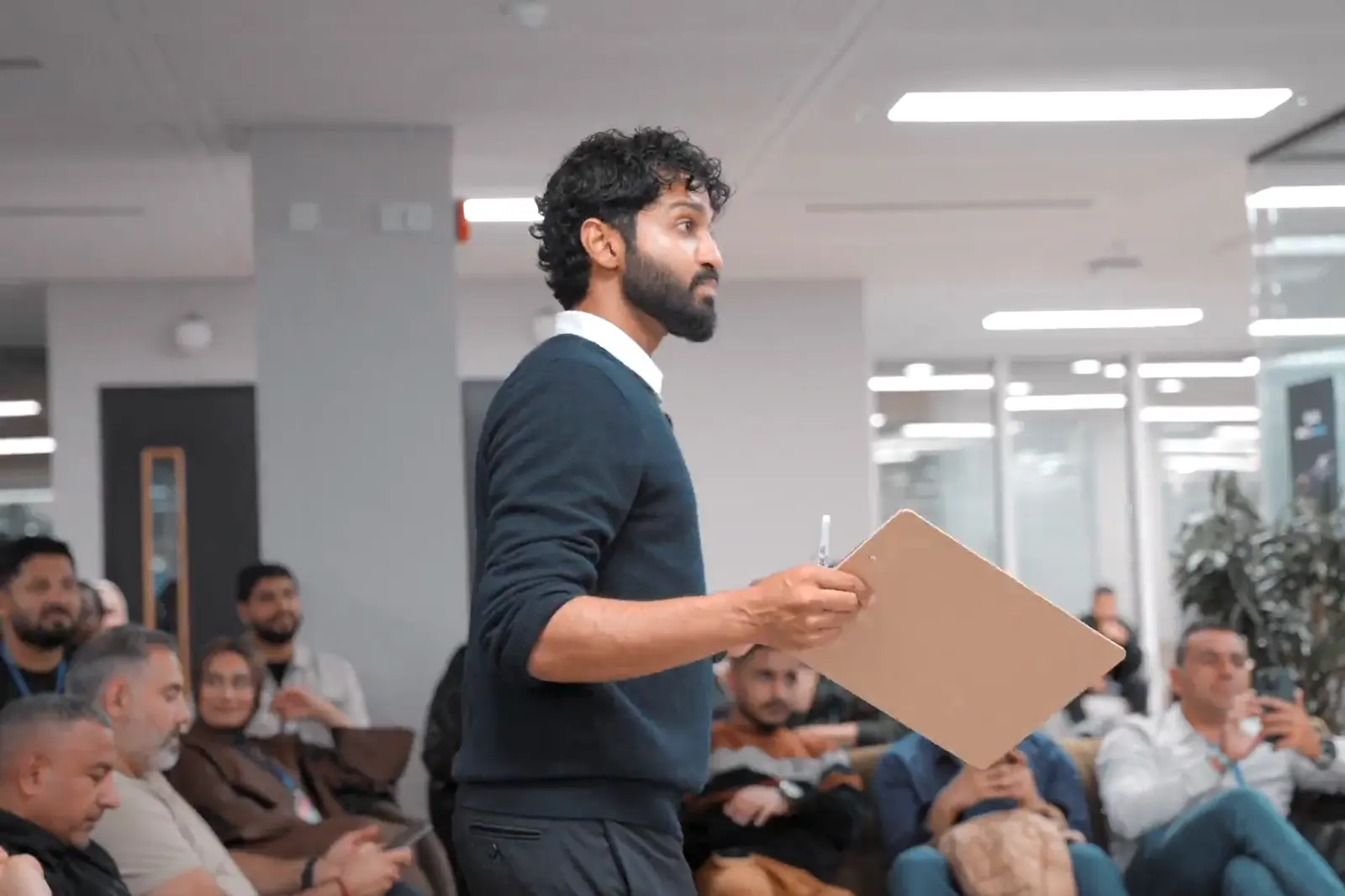
A buildathon is a structured event. Participants learn about a problem that affects a disadvantaged community, research one part of it in a team, and build a simple practical response with help from mentors.
The format
Every buildathon follows the same stages, from the trustees approving the problem to the review afterwards.
They check who is affected, what evidence exists, and whether a buildathon can do useful work on it. The Foundation then researches the problem and writes a short brief.
The event opens with the problem: who it affects, what support already exists, and what the evidence says. People who know the problem first hand speak and take questions.
Participants work in small teams. Each team chooses one part of the problem and researches who is affected, what exists already and what could be improved.
Mentors help with research, technology, design and testing. They help teams narrow the problem. They do not choose the answer.
A website, guide, toolkit, prototype, research report or another practical resource. It does not need to be a finished product.
Each team explains the problem, the evidence, what it built and what it would do next. Afterwards the Foundation reviews the programme and may publish useful work.
The problems
The trustees do not approve a programme because it is interesting, innovative or likely to attract publicity. It must help the people the Foundation exists for.
Helping people find free debt advice, understand the information they are given, and know when and where to ask for help.
Helping people find reliable housing information, understand application processes, and reach the right support.
Opening up practical skills, including digital and AI tools, to people who have had fewer chances to learn them.
Working on access to technology for people who have limited use of devices, tools or the internet.
Making existing information and services easier to find, understand and use.
Other problems affecting disadvantaged communities, once the trustees have approved them.
Suggest oneWhat teams build
Where work is useful to the wider community, the Foundation may publish or share it, so the people who attend are not the only ones who benefit.
Practical training
The Foundation does not provide formal qualifications. Participants may receive a certificate showing that they took part.
Teams decide
Teams decide what to build and explain the evidence behind their decision. No one is asked to support a party, policy, campaign, company, product or particular solution.
Participants can:
Events
Sunday 7 June 2026. 120 people took part.
RecapDate and place to be announced.
Get notifiedOrganisations can help with funding, venues, tools, speakers and mentors. Charities and community groups can share the opportunity with the people it is for.
We email when applications open and when work from a programme is published.
Occasional emails. Unsubscribe anytime.